

Table of Contents
- Identify the Source of the Odor
- Step 1: Scoop Solid Waste Daily
- Step 2: Remove Urine Clumps Regularly
- Step 3: How Often to Clean a Cat Litter Box
- Step 4: Choose the Best Deodorizer for a Cat Litter Room
- Step 5: Use Baking Soda in Cat Litter Strategically
- Step 6: How to Remove Cat Urine Smell From Carpet
- Step 7: Improve Ventilation and Airflow
- Frequently Asked Questions
Last Updated: October 11, 2026
Identify the Source of the Odor
Before you tackle cat litter smell, figure out where it's coming from. The odor might be from the litter itself, urine that's soaked into surrounding surfaces, poor ventilation, bacterial growth in the tray, or even a health issue in your cat. Each source needs a different fix, and treating the wrong problem wastes time and money.
Use this diagnostic flowchart to pinpoint the actual culprit:
Step 1: When did the smell start?
- Sudden, strong change in odor intensity or character → Possible health issue (see "When to Call the Vet" below). Schedule a checkup.
- Gradual increase over weeks → Likely maintenance or litter issue.
Step 2: Where is the smell strongest?
- Only near the litter box → Litter, tray cleanliness, or urine clumps.
- Throughout the room or home → Ventilation or urine soaked into surfaces (carpet, subfloor, furniture).
- Localized wet spots on floor or carpet → Urine has penetrated beyond the box.
Step 3: What does the litter box look like?
- Wet, clumpy, or discolored litter → Litter is old, depleted, or not clumping well. Replace or switch brands.
- Dry litter but visible waste → Scooping frequency is too low.
- Clean litter but plastic tray looks stained or discolored → Urine has soaked into the tray material itself.
Step 4: How's the airflow in that room?
- No windows, door usually closed, or stale air smell → Ventilation is the problem.
- Fresh air circulates regularly → Ventilation is not the issue.
Step 5: Is this a multi-cat household or single cat?
- Multiple cats → Odor compounds faster; you may need more frequent scooping, more boxes, or both.
- Single cat → Standard maintenance should work if applied consistently.
Once you've answered these questions, you'll know whether to focus on litter replacement, scooping frequency, tray cleaning, surface treatment, ventilation, or a vet visit. This saves you from trying random fixes and helps you solve the real problem.
Step 1: Scoop Solid Waste Daily
Scooping feces from the litter tray every single day is the foundation of odor control. Fresh waste creates the strongest smells, and leaving it sitting multiplies the problem fast.
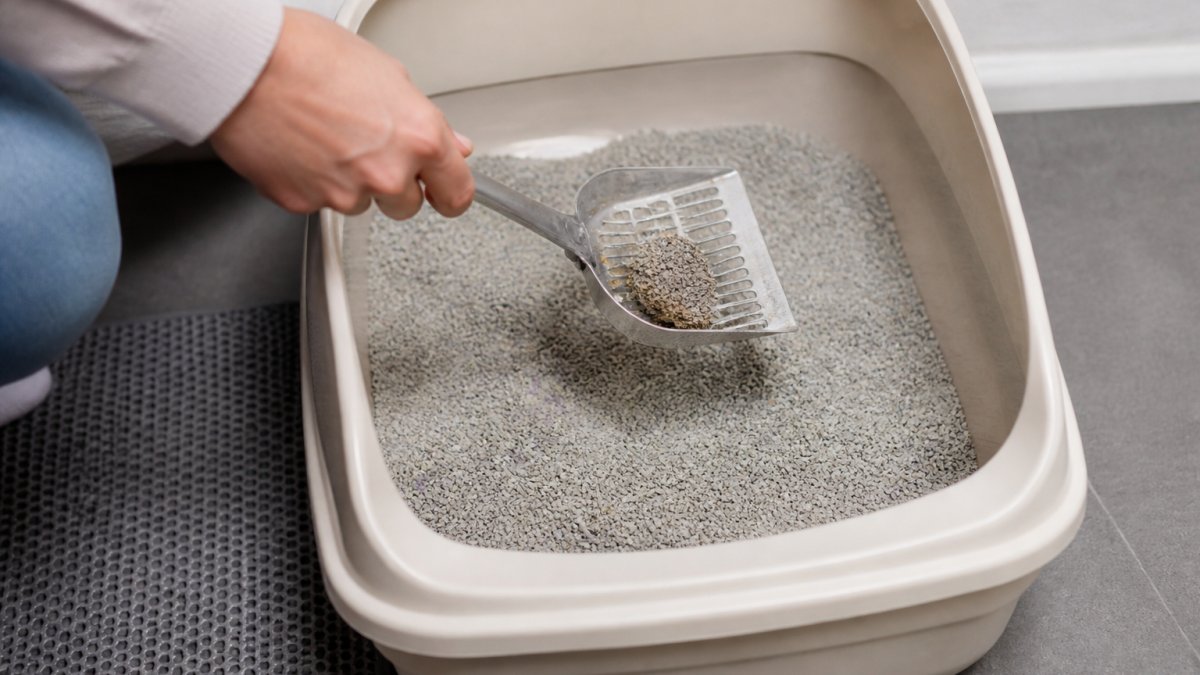
Make scooping a habit. The best time is morning before work or right after your cat uses the box.
If you have multiple cats, scoop more often. A multi-cat household generates more waste, and the smell compounds quickly. Daily scooping keeps solid waste from breaking down and releasing ammonia-like compounds into the air.
Step 2: Remove Urine Clumps Regularly
Urine creates clumps in clumping litter, and those clumps hold moisture that breeds bacteria and odor. Removing clumps daily, sometimes twice daily, prevents urine odor from building up.
When you scoop, look for hard clumps that have formed around wet litter. These are concentrated urine. Dig under and around them to pull out the entire clump, not just the top.
In a multi-cat household or small space, check the box more often. Urine clumps can form within hours. The longer they sit, the more ammonia develops. Fresh urine smells bad, but old urine smells terrible.
Some litter types clump better than others. If your current litter isn't forming solid clumps, switching to a better clumping formula makes this step easier and more effective.
Step 3: How Often to Clean a Cat Litter Box
Beyond daily scooping, wash the actual litter tray itself at least once a week. This removes urine residue, bacteria, and odor-causing compounds that soak into the plastic.
Empty the entire box into a sealed bag. Rinse the tray with hot water and mild soap. For stubborn odors, use white vinegar as a natural cleaner.
For a multi-cat household or very active single cat, wash the tray twice a week. The more cats, the more urine accumulates on surfaces. Weekly washing keeps odors manageable.
| Household Type | Scooping Frequency | Tray Washing Frequency | Litter Replacement |
|---|---|---|---|
| Single cat | Once daily | Once weekly | Every 2-3 weeks |
| Two cats | Twice daily | Twice weekly | Every 10-14 days |
| Three+ cats | 2-3 times daily | 2-3 times weekly | Every 7-10 days |
After washing, dry the tray completely before adding fresh litter. Damp plastic traps moisture and speeds up odor development. Use a clean cloth or paper towels to dry it fully.
Step 4: Choose the Best Deodorizer for a Cat Litter Room
Adding a deodorizer to your space works alongside litter maintenance, but not all products are equal.
Understand the difference: Masking vs. Neutralizing
Masking products (air fresheners, perfume sprays, scented candles with fragrance only) layer a stronger smell on top of the problem. They don't eliminate odor; they just make it harder to detect for a few hours.
Neutralizing products contain active ingredients that chemically break down or absorb odor molecules:
- Activated carbon traps odor molecules in its porous structure. Found in air purifiers and some litter additives.
- Baking soda (sodium bicarbonate) neutralizes ammonia, the main culprit in urine odor.
- Enzymatic cleaners contain bacteria that break down uric acid crystals, the source of set-in urine smell.
- Odor-eliminating candles use activated charcoal or similar absorbents combined with heat to neutralize airborne odor molecules, not just scent them.
Safe deodorizer options by room type:

For the litter box area itself:
Dried Oak & Lavender Pet Odor Eliminator Candle - Earthy Woodsy Scented 13oz →
- Sprinkle baking soda directly into fresh litter (see Step 5 for details).
- Use litters with built-in odor control (activated charcoal, baking soda, or plant-based absorbents).
- Place an open box of baking soda or activated charcoal near (not in) the litter box.
For the room:
- Portable air purifiers with HEPA and activated carbon filters. Run continuously or 2-3 hours daily. Effective in small spaces like bathrooms or closets.
- Odor-eliminating candles (soy or beeswax, not paraffin) burned 2-3 hours daily. Ensure the room has airflow so fumes don't concentrate.
- Enzymatic sprays or powders for carpet and hard surfaces around the box (use only on soiled areas, not as a room spray).
Avoid:
- Plug-in air fresheners and aerosol sprays, they mask odor and add chemical fumes to a space where your cat breathes.
- Scented litter, fragrance can irritate cats' sensitive noses and often makes odor worse by mixing with urine smell.
- Paraffin candles, they produce soot and don't neutralize odors effectively.
- Essential oil diffusers or sprays, many essential oils (tea tree, eucalyptus, citrus) are toxic to cats.
Safe cleaning product combinations:
When cleaning the litter tray or surrounding surfaces, use only one type of cleaner at a time. Mixing products can create toxic fumes.
- White vinegar + water (1:1 ratio): Safe, non-toxic, neutralizes ammonia. Spray, let sit 5-10 minutes, scrub, rinse well. Effective on plastic trays and hard floors.
- Baking soda paste (baking soda + water): Gentle abrasive for scrubbing. Safe for all surfaces.
- Enzymatic pet cleaner (follow product label): Use alone on carpet or hard surfaces. Do not mix with vinegar or bleach.
- Mild dish soap + hot water: Safe for general cleaning. Rinse thoroughly.
Never mix:
- Bleach + vinegar or ammonia → produces toxic chlorine gas.
- Bleach + baking soda → reduces bleach effectiveness and can release harmful fumes.
- Multiple cleaners in sequence without thorough rinsing → residual chemicals can react.
If you use a commercial cleaner, rinse the area thoroughly with plain water and allow it to dry completely before your cat uses the space. Residual chemicals can irritate paws and respiratory passages.
Step 5: Use Baking Soda in Cat Litter Strategically
Baking soda is a proven odor absorber that works directly in the litter. Sprinkle a light layer on top of fresh litter when you add it to the box, then add another layer on top.
Don't overdo it. Too much baking soda makes the litter dusty and can irritate your cat's paws and respiratory system. A thin dusting, about a quarter inch, is enough.
Some commercial litters already include baking soda. Check the label. If your litter has it built in, you don't need to add more. If it doesn't, adding baking soda yourself boosts odor control significantly.
Replace the baking soda layer when you scoop. Old, saturated baking soda loses its absorbing power. Fresh baking soda works best.
Step 6: How to Remove Cat Urine Smell From Carpet
If urine has soaked into carpet around the litter box, the smell will persist no matter how clean you keep the box.
Start by identifying wet spots. Use a blacklight flashlight to see where urine has soaked in, it glows under UV light. Mark these areas so you don't miss them.
For fresh urine, blot up as much as possible with paper towels. Don't rub; blotting lifts liquid without pushing it deeper.
For old, set-in urine, vinegar alone won't work. Use an enzymatic cleaner designed for pet urine.
After cleaning, place a waterproof mat under and around the litter box to protect carpet from future accidents. This stops urine from soaking back into the fibers.
Step 7: Improve Ventilation and Airflow
Stale air traps odors and makes them concentrate in one spot. Fresh air naturally disperses and dilutes cat litter smell.
If opening windows isn't practical, use a fan to move air around the room.
For apartments or rooms without windows, a portable air purifier with activated carbon filtration helps. Activated carbon absorbs odor molecules from the air.
Ventilation matters most in small spaces like bathrooms or closets where litter boxes often sit. Poor airflow lets ammonia build up quickly.
Consider the litter box location itself.
Getting rid of cat litter smell takes consistent effort across multiple fronts: daily scooping, regular tray cleaning, smart deodorizing, and good ventilation.
If strong odors persist after you've implemented these steps, check with your vet. Tom's odor-eliminating candles paired with these maintenance steps will keep your home smelling clean. Shop our pet odor eliminator candles and enjoy the confidence of a truly fresh home.

Frequently Asked Questions
How often should you scoop and change cat litter to control odor?
Scoop solid waste and urine clumps daily to prevent odor buildup. Replace the entire litter box contents weekly, or more frequently in multi-cat households. Daily scooping removes the primary source of cat litter smell before it accumulates. Weekly full replacements ensure fresh litter and eliminate bacteria that cause persistent odors even after scooping.
Is it safe to sprinkle baking soda in my cat's litter box?
Yes, baking soda is safe for cats when used in moderation. Sprinkle a thin layer at the bottom of the litter box before adding fresh litter, or mix it into the litter itself. Baking soda absorbs moisture and neutralizes odors naturally. Avoid excessive amounts, as large quantities can irritate your cat's respiratory system. A light dusting is sufficient for odor control.
What should I do if I can't find the source of cat urine smell in my home?
Use a blacklight or UV flashlight to locate hidden urine spots on carpet, furniture, and walls, cat urine fluoresces under UV light. Check corners, baseboards, and areas your cat frequents. Once located, clean with an enzymatic cleaner designed to break down urine compounds. If the smell persists after cleaning and your litter routine is solid, consult your veterinarian to rule out urinary tract issues or marking behavior.
Can a pet odor eliminator candle actually remove cat litter smell, or does it just mask it?
Quality pet odor eliminator candles are formulated to neutralize odors rather than simply mask them. Unlike standard air fresheners, products like Belle & Mr. Tom's pet odor candles contain active odor-neutralizing ingredients that break down odor molecules. Combined with proper litter maintenance, scooping, and ventilation, a candle designed specifically for pet odors can help neutralize cat litter smell and contribute to a fresh-smelling home.