

Table of Contents
- Why Dog Smell Sinks Into Upholstery and How to Find the Source
- How to Get Dog Smell Out of a Couch: Step-by-Step
- Does Vinegar Remove Dog Smell From a Couch?
- Enzyme Cleaner for Pet Odors: When Home Remedies Are Not Enough
- Drying and Moisture Control After Cleaning Upholstery
- How to Prevent Dog Smell on Furniture Long-Term
- When to Call a Professional Cleaner
- Conclusion
- Frequently Asked Questions
Last Updated: October 12, 2026
Why Dog Smell Sinks Into Upholstery and How to Find the Source
Dog smell settles into upholstery because fabric and foam trap oils, sweat, and dander from your pet's coat. Air fresheners only cover the top layer, so the smell returns within hours.
This guide from Belle & Mr. Tom covers diagnosis, cleaning, drying, and prevention.
Soft surfaces hold odor longer than hard floors: a couch's foam, batting, and fabric each grab onto pet oils.
Here is what makes the smell stick:
- Body oils from your dog's coat transfer every time they lie down
- Dander and saliva dry into the fabric weave
- Moisture from damp fur feeds bacteria that produce odor
Check the Care Label and Patch Test First
Before any liquid touches your couch, read the care label. Most cushions carry a code: W for water-based cleaners, S for solvent only, WS for both, X for vacuum only.
If your label says S or X, skip the vinegar and water step. Water can set stains or damage the fabric backing.
Patch testing takes two minutes and saves your sofa:
- Pick a hidden spot, like the back of a cushion
- Apply a small amount of your cleaning mix
- Wait 15 minutes and check for color change or wrinkling
- Let it dry fully before judging
Diagnose Where the Odor Is Coming From
Odor source diagnosis is the step most people skip. Run your hand over the couch and smell your palm, checking:
- Your dog's usual nap spot
- The seat cushions, not just the back
- Under the cushions, where crumbs and hair collect
A sharp, ammonia-like smell is likely urine; a musty one is body oil and dander. Each needs a different approach.
ASPCA guidance on pet odor and cleaning
How to Get Dog Smell Out of a Couch: Step-by-Step
Getting dog smell out of a couch takes three passes: vacuum, baking soda, then vinegar spray. Each builds on the last, and skipping one leaves odor behind.
Set aside about an hour. Most of that time is waiting, not scrubbing.
Step 1: Vacuum the Entire Sofa, Including Cushion Interiors
Vacuuming lifts the loose hair, dander, and dust that hold odor, spraying over a dirty couch just wets the mess. Pull off every cushion and vacuum both sides, then the frame, crevices, and under the seat.
- Use a brush attachment on fabric to lift embedded hair
- Go over each cushion twice, in two directions
- Empty the canister when you finish
If your cushions have zippered covers, check whether the foam inside smells. Odor trapped in foam needs a deeper clean.
Step 2: Apply Baking Soda and Let It Sit
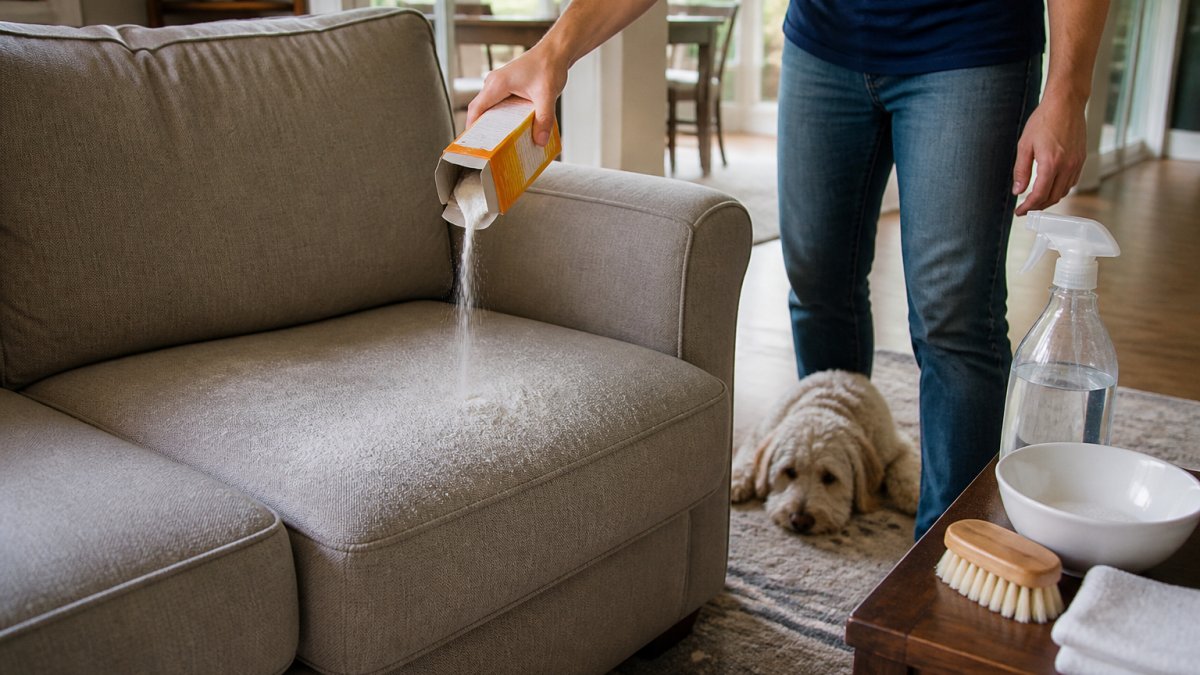
Baking soda absorbs odor rather than covering it. Sprinkle a generous layer over the whole couch, including cushion interiors, and let it sit at least 15 minutes, overnight for strong smells.
Step 3: Spray a Vinegar and Water Solution and Vacuum Again
Mix equal parts white vinegar and water in a spray bottle, adding a few drops of dish soap for oily spots. Lightly mist the fabric, do not soak it. Let it sit 10 to 15 minutes, blot, then vacuum once dry.
| Step | What It Does | Wait Time |
|---|---|---|
| Vacuum | Lifts hair and dander | None |
| Baking soda | Absorbs odor | 15 min to overnight |
| Vinegar spray | Neutralizes residue | 10-15 min |
| Final vacuum | Removes dried powder | None |
Does Vinegar Remove Dog Smell From a Couch?
Yes, white vinegar removes many dog odors from a couch, but it is not a full fix. Its acidity neutralizes alkaline compounds in urine and body oils, but only on the surface, if urine soaked into the foam, a spray will not reach it.
Where vinegar helps most:
- Light surface odor from dander and oils
- Fresh accidents caught early
- A final rinse after a deeper clean
Where it falls short:
- Old urine stains deep in the foam
- Odor in the frame or padding
- Smells that return within a day
Vinegar leaves its own scent for a few hours, which fades as it dries. If the dog smell returns after that, the source is deeper than the surface.
How Vinegar Compares to Baking Soda and Enzyme Cleaners
Most guides treat vinegar, baking soda, and enzyme cleaners as interchangeable. They are not, each works on a different part of the odor problem.
| Method | What It Actually Does | Best For | Limits |
|---|---|---|---|
| White vinegar + water | Acid neutralizes alkaline odor compounds on contact | Surface dander, fresh accidents, final rinse | Does not reach foam; can leave a temporary scent; risky on S- and X-coded fabric |
| Baking soda | Absorbs and traps odor molecules in powder | Whole-couch deodorizing, cushion interiors | No cleaning power; needs vacuuming; does nothing for soaked-in urine |
| Enzyme cleaner | Breaks down proteins and uric acid at the source | Old urine, recurring odor, foam and padding | Needs 10-15 minutes of contact time; must stay damp to work |
| Fabric refresher spray | Adds scent and light odor-binding agents | Between deep cleans | Masks rather than removes; buildup can attract more dirt |
A common pattern is to layer them: vacuum first, baking soda second, vinegar third, and enzyme cleaner only where odor keeps returning.
Fabric Safety: When Vinegar Is the Wrong Choice
Vinegar is not safe on every couch, check the care code on the cushion tag first.
- W, water-based cleaners are fine; vinegar and water is safe
- S, solvent-only; skip vinegar and water entirely
- WS, water- or solvent-based; vinegar is generally safe
Even on W- and WS-coded fabric, vinegar can dull rayon blends, weaken bonded leather backing, and leave water rings on linen and silk blends. Always patch test and let it dry fully.
The Mechanism: Why Vinegar Fades but Odor Returns
Vinegar neutralizes odor compounds it touches but does not remove the source. When urine or saliva soaks into foam, the residue stays, and every time humidity rises or the cushion warms, the odor releases again, which is why a couch can smell clean for a day and like dog again by the weekend. The fix is not more vinegar but an enzyme cleaner applied to the foam, or professional extraction.
Dried Oak & Lavender Pet Odor Eliminator Candle - Earthy Woodsy Scented 13oz →
Enzyme Cleaner for Pet Odors: When Home Remedies Are Not Enough
Enzyme cleaner for pet odors is the right tool when vinegar and baking soda cannot reach the source. Enzymes break down the proteins and uric acid in urine that keep the smell coming back. Use it when:
- The odor returns within a day of cleaning
- You can smell urine but cannot see a stain
- The smell sits in the foam, not the fabric
Apply it like the vinegar mix: mist, let it sit 10 to 15 minutes, then blot, enzymes need contact time.
For everyday freshness between deep cleans, we recommend a pet odor eliminator candle. Our Into the Woods Pet Odor Eliminator Candle is formulated to neutralize pet odors rather than mask them, and it is phthalate-free and Prop 65 compliant.

Drying and Moisture Control After Cleaning Upholstery
Drying decides whether the smell stays gone. Damp fabric grows bacteria and mildew, and both smell worse than the dog did.
Speed up drying:
- Open windows and run a fan across the couch
- Blot with dry towels until no moisture lifts
- Pull cushions upright so air reaches every side
A wet couch can take a full day to dry in humid weather. If the fabric still feels cool or damp after a few hours, keep the fan running.
How to Prevent Dog Smell on Furniture Long-Term
Preventing dog smell on furniture comes down to routine, not one big clean, but the habits that work depend on where the odor came from.
Match Prevention to the Odor Source
Before building a routine, identify what you are preventing.
- Body oils and dander, the most common source. Prevention is brushing your dog, washing covers, and vacuuming weekly.
- Urine, needs enzyme treatment on the foam and a waterproof barrier between the dog and the cushion.
- Saliva and damp-dog smell, comes from wet fur and drool. Prevention is drying your dog before they get on the couch and washing covers more often in humid months.
Skip this step and you clean the surface while the source keeps feeding the smell from inside the cushion.
Protect the Cushion Interiors, Not Just the Fabric
Odor lives in foam, batting, and the upholstery backing long after the surface looks clean. Prevention has to reach those layers.
- Use a waterproof cushion liner under the cover. It blocks liquid before it reaches the foam, where urine and saliva do the most damage.
- Rotate and air out cushions weekly. Pull them off the frame and let them sit in open air for a few hours to release trapped moisture and odor.
- Wash removable covers every two to three weeks, not just when they look dirty. Oils from a dog's coat are invisible but build up.
Control Moisture Before It Becomes Odor
Damp fabric grows bacteria and mildew, and both smell worse than the dog did. Moisture control is the prevention step most guides skip.
- Run a fan or open windows for at least an hour after any wet cleaning
- Blot with dry towels until no moisture lifts
- Pull cushions upright so air reaches every side
Build a Weekly and Monthly Routine
Prevention works best as a schedule, not a reaction.
Weekly:
- Vacuum the couch, including under the cushions
- Air out cushions for a few hours
- Brush your dog to cut down on shedding and dander
Monthly:
- Wash removable cushion covers
- Check the waterproof liner for tears or gaps
- Smell the foam inserts directly, if they smell, treat or replace them
Seasonally:
- Deep clean with baking soda and a vinegar rinse, or an enzyme cleaner if odor has returned
- Inspect the frame and skirt for hidden urine wicking
- Replace the washable throw on your dog's favorite spot
A washable throw is the easiest single fix: your dog lies on it, and you wash it instead of the couch, cutting the oil and dander that reach the fabric.
For ongoing freshness between deep cleans, a pet odor eliminator candle helps. Our Dried Oak & Lavender Pet Odor Eliminator Candle is made with a soy blend wax and a cotton wick, and it neutralizes odors instead of covering them.

EPA guidance on indoor air quality and pets
When to Call a Professional Cleaner
Call a professional when the odor survives a full deep clean. Some smells sit in the foam, frame, or subfloor where no home method reaches.
Look for these signs:
- The smell returns within a day of cleaning
- You find old stains under the cushions
- The odor has spread to the carpet or walls
A pro has extraction tools that pull liquid and odor out of deep foam. If the couch is old and the odor is everywhere, replacement may cost less than repeated cleanings.
Conclusion
Lingering dog smell is frustrating, especially when guests notice it before you do. Fix it with the right steps: diagnose the source, vacuum deep, absorb with baking soda, neutralize with vinegar, and dry completely. For smells that keep coming back, an odor eliminator that neutralizes rather than masks makes the difference. At Belle & Mr.

Frequently Asked Questions
What neutralizes dog smell in upholstery?
Baking soda absorbs odor molecules from fabric, while a diluted white vinegar and water solution neutralizes the alkaline compounds in dog smell. For odor that has soaked into cushion foam or repeated accidents, an enzyme cleaner breaks down the proteins and bacteria causing the smell. Most pet owners get the best results by combining all three: vacuum, apply baking soda, let it sit, then spray vinegar and vacuum again. For ongoing freshness between deep cleans, a pet odor eliminator candle can help maintain a neutral-smelling room.
Does vinegar get dog smell out of a couch?
Yes, diluted white vinegar removes many surface-level dog odors from couch fabric. Mix equal parts white vinegar and water in a spray bottle, mist the upholstery lightly, and let it sit for 10 to 15 minutes before blotting and vacuuming. Vinegar neutralizes odor rather than covering it, and the vinegar scent fades as it dries. It works best on fresh or mild odors. For set-in smells or urine, use an enzyme cleaner after the vinegar step.
How do you remove dog odor from upholstery without damaging the fabric?
Always check the care label before applying anything. W, WS, and S codes each allow different cleaning methods, and some fabrics cannot handle water at all. Patch test any solution on a hidden area first and wait 24 hours. Use a spray bottle to apply light mists rather than soaking the fabric, and blot instead of scrubbing. If the label says dry clean only or you see color bleeding during the patch test, stop and call a professional cleaner.
How can you keep dog smell from returning to upholstery?
Vacuum your couch weekly, wash removable cushion covers on a schedule, and keep a washable blanket on your dog's favorite spot. Air out rooms daily and address accidents immediately before odor soaks into foam. For continuous freshness between deep cleans, a soy blend pet odor eliminator candle neutralizes lingering odors instead of masking them. Belle & Mr. Tom's Into the Woods candle holds a 5.0 out of 5.0 rating from customers using it for exactly this purpose in multi-pet homes.