
Table of Contents
- How We Evaluated Odor Neutralizer Options for Vet Clinics
- Common Odor Sources and Hotspots in Veterinary Clinics
- Odor Removal vs. Fragrance Masking: What Actually Works
- Product Types Compared: Sprays, Concentrates, Candles, and Air Systems
- Choosing a Pet-Safe Odor Eliminator for Clinics
- Odor Neutralizer Spray for Veterinary Clinics: Where It Fits
- Air Purifier for Veterinary Clinic Odors: What It Can and Can't Do
- Scent Systems for Veterinary Waiting Rooms: A Cautious Approach
- Frequently Asked Questions
Last Updated: October 19, 2026
How We Evaluated Odor Neutralizer Options for Vet Clinics
Finding an odor neutralizer for vet clinics means balancing three things that rarely arrive together: real odor elimination, safety around animals, and a cost per use that survives a full calendar year.
We scored every option against five criteria. First, mechanism: does it neutralize odor molecules or simply cover them? Second, safety: is the product formulated without phthalates and compliant with California's Proposition 65 warning requirements, which the California Office of Environmental Health Hazard Assessment maintains? Third, coverage and application frequency.
Common Odor Sources and Hotspots in Veterinary Clinics
Most clinic odor complaints trace back to a short list of sources: urine, feces, vomit, and organic residue trapped in porous surfaces. Kennels, cages, litter areas, and treatment rooms carry the heaviest load because they combine moisture, animal contact, and repeated cleaning.
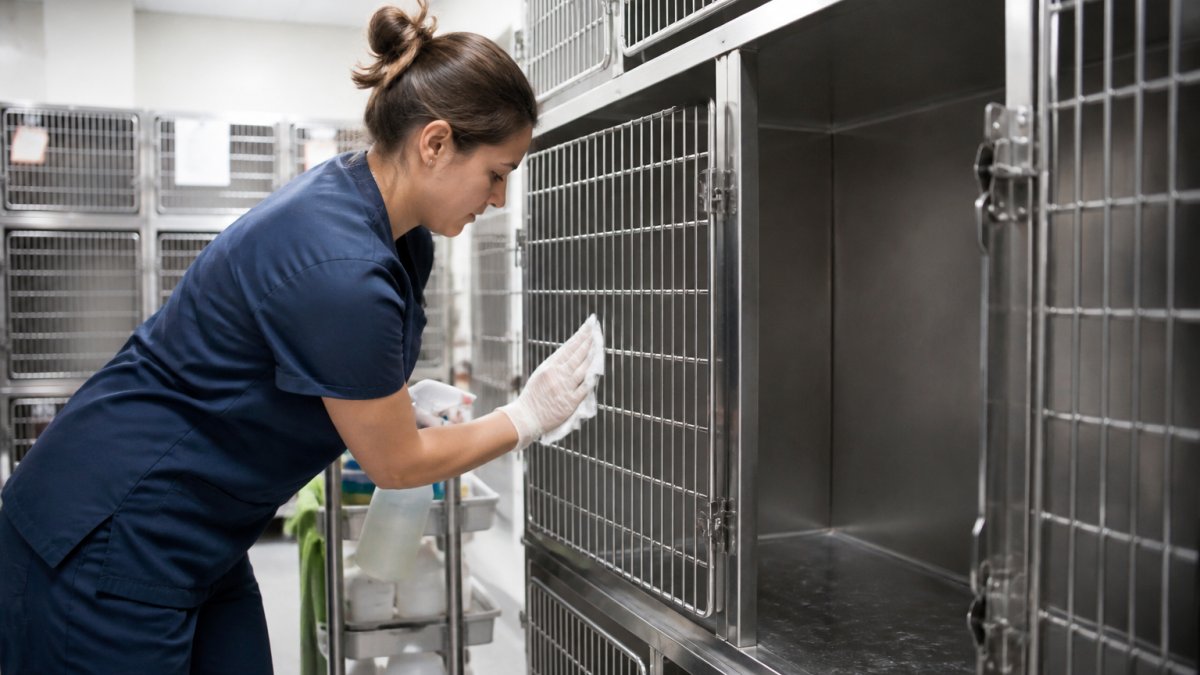
Odor hotspots tend to cluster where cleaning stops short.
A common mistake is treating the waiting room while ignoring the ward. Fix the source first, then manage the air.
Odor Removal vs. Fragrance Masking: What Actually Works
Odor removal changes the odor molecules; fragrance masking covers them. An air freshener adds scent on top of the problem, and the moment the fragrance fades, the original smell returns stronger because the source was never touched.
Molecular neutralization works differently. A true odor neutralizer binds with the volatile compounds responsible for the smell, which is why the result lasts beyond the burn time or spray life. This is the distinction that matters most when you compare products, and it is where most clinic buying decisions go wrong.
Product Types Compared: Sprays, Concentrates, Candles, and Air Systems
Four product types dominate the category, and each fits a different job.
| Product Type | Active Approach | Best For | Coverage | Application Frequency | Main Limitation | Cost-per-Use Driver |
|---|---|---|---|---|---|---|
| Ready-to-use spray | Molecular neutralizer or enzyme in a carrier; binds or breaks down odor compounds on contact | Spot treatment on exam tables, carriers, bedding, soft surfaces | Square footage of treated surface | As needed; daily in hotspots | Short dwell time on porous surfaces; surface must stay wet for label contact time | Bottle price divided by treated area per trigger pull |
| Concentrate | Same actives, diluted into cleaning water | Floors, kennel banks, litter areas, drain surrounds | Large surface area per mop bucket | Every routine cleaning cycle | Requires correct dilution; over-dilution kills efficacy | Dilution ratio and number of cleaning cycles per container |
| Candle or passive scent | Fragrance oils released by heat or evaporation; masks rather than neutralizes unless formulated with odor-binding compounds | Reception, waiting, consult rooms | Room-level ambient air | Per shift or as needed | Not a substitute for surface cleaning; open flame requires supervision | Burn time per unit versus hours of coverage |
| Air-treatment system | Carbon filtration, photocatalytic oxidation, or metered scenting | Whole-room airborne odors, waiting rooms, small exam spaces | Room volume, measured in air changes per hour | Continuous | Cannot reach the odor source; filters and refills add recurring cost | Upfront unit cost plus filter or refill schedule and electricity |
Cost per use separates these types more than sticker price does. A concentrate that dilutes into a mop bucket typically costs less per cleaning cycle than a ready-to-use spray because one container covers many more square feet.
The decision rule is source first, air second. Match the product type to the odor source: enzyme or neutralizer concentrate for urine and organic residue in porous surfaces, ready-to-use spray for client-contact surfaces, air treatment only after the source is under control.
Choosing a Pet-Safe Odor Eliminator for Clinics
A pet-safe odor eliminator for clinics must do two things at once: reduce odor and avoid adding respiratory irritants to a space full of animals with sensitive airways.

Use this five-point assessment on every candidate product:
- Intended use: air or surface. Read the label's intended-use statement first. A product labeled for surface treatment is not validated for airborne application, and a plug-in or metered air product is not a surface cleaner. Using one as the other is the most common compliance and efficacy mistake.
- Label directions and contact time. Note the required dwell or contact time and whether the surface must stay wet for that full period. A neutralizer that needs ten minutes of wet contact will not perform on a vertical kennel wall that dries in two.
- Ventilation and application method. Check whether the label requires ventilation during use, specifies a spray pattern, or prohibits application around occupied animal enclosures. In a ward with recirculating HVAC, an aerosolized product can travel farther than the applicator expects.
- Surface compatibility. Confirm the product is compatible with stainless steel, sealed concrete, vinyl matting, and the grout lines between them. Repeated use of an incompatible concentrate can dull stainless or degrade seam sealant, which creates new places for residue to collect.
- Ingredient disclosure and warning requirements. Look for clear ingredient disclosure and check whether the product carries a California Proposition 65 warning, which the California Office of Environmental Health Hazard Assessment maintains. A warning does not automatically disqualify a product, but it should prompt a conversation about where and how it is used.
Veterinary-specific safety matters more than general household safety. Cats in particular process airborne compounds differently from dogs, and a product that is fine in a home may be too concentrated for a small, poorly ventilated cage bank. Most practitioners find that a product tested in one ward for a week reveals more than a label claim does.
A practical rollout: test one product per odor source category, one surface neutralizer, one enzyme concentrate, one air treatment, in a single ward for a week. Track staff and client feedback and note any surface changes before expanding to the rest of the clinic. That small trial costs far less than a case of product the clinic cannot safely use.
Odor Neutralizer Spray for Veterinary Clinics: Where It Fits
An odor neutralizer spray for veterinary clinics fits best as a finishing step, not a primary cleaner. Use it on exam tables, bedding, carriers, and soft surfaces after cleaning and drying, and let it dwell for the full time the label specifies.
Kitchen Lemon Pet Odor Eliminator Candle - Lemon Citrus Floral Scented 13oz Soy →
Sprays earn their place in exam rooms and reception seating, where a full wash-down is impractical between appointments. They fall short in kennel banks, where urine soaks into seams and needs an enzymatic solution first.
The operational rule we would set: spray for surfaces clients touch, concentrate for surfaces animals occupy.
Air Purifier for Veterinary Clinic Odors: What It Can and Can't Do
An air purifier for veterinary clinic odors reduces airborne odors and dander, but it cannot eliminate an odor source. A purifier with a carbon stage captures some volatile compounds as air passes through, which helps in waiting rooms and small exam spaces.
What it cannot do is reach urine soaked into a kennel floor or residue in a drain. Clinics that buy a purifier expecting it to solve ward odor end up disappointed, because the machine is filtering air that keeps picking up the same smell. Size the unit to the room volume, replace filters on schedule, and treat it as a supplement to source treatment.
Scent Systems for Veterinary Waiting Rooms: A Cautious Approach
Scent systems for veterinary waiting rooms need more caution than any other product in this category. Ambient scenting and scent machines deliver consistent fragrance, which clients may enjoy, but the same fragrance reaches animals in carriers and can aggravate respiratory sensitivity.
If you use ambient scent at all, keep it to reception and waiting areas, never the ward, and choose unscented or lightly scented options where possible. A hand-poured soy-blend candle from our own line, such as the Into the Woods Pet Odor Eliminator Candle at $28.99, gives reception a fresh evergreen note while its formulation targets pet odors rather than layering fragrance over them.
For clinics that prefer a citrus profile in consult rooms, the Kitchen Lemon Pet Odor Eliminator Candle at $28.99 neutralizes both pet and food odors, which helps in rooms where staff eat between appointments. Both are one-time purchases at $28.99.

One honest limitation: a candle is a room-level product, not a whole-clinic solution. It will not fix a kennel bank, and it should never be left burning unattended, per standard fire safety practice.
Frequently Asked Questions
What is the best odor neutralizer for a veterinary clinic?
There is no single best option because clinic odors come from different sources. For urine and organic residue in kennels, enzymatic cleaners and source treatment do most of the work. For airborne odors in waiting rooms and exam areas, a neutralizer that targets odor molecules rather than covering them with fragrance is the better fit. Many clinics combine both: source-level cleaning in treatment areas and a neutralizer or air treatment in client-facing spaces. Match the product to the zone, not the other way around.
What is the difference between an odor neutralizer and an air freshener?
An air freshener adds fragrance on top of a smell, which often makes the problem worse in a clinic because the underlying odor is still there. An odor neutralizer works on the odor molecules themselves, either by binding them or breaking them down, so the smell is reduced rather than hidden. For veterinary settings, this distinction matters because masking agents can trigger sensitivity in pets and clients. Look for labels that describe neutralization, not just scent.
Are air fresheners safe to use around pets in a veterinary clinic?
Many conventional air fresheners contain phthalates and synthetic fragrances that can irritate pets, especially cats and animals with respiratory conditions. Clinics should favor unscented or phthalate-free options and avoid heavy ambient scenting in treatment and recovery areas. Even pet-safe products should be used with ventilation and never applied directly to animals or their bedding. If a product's label does not clearly state it is phthalate-free, treat it as unsuitable for animal-care spaces.
How often should a veterinary clinic clean areas with persistent odors?
High-traffic odor hotspots like kennels, litter areas, and exam tables need routine cleaning between every patient, with a deeper enzymatic treatment on a daily or weekly schedule depending on volume. Waiting rooms and reception areas typically need surface cleaning daily and air treatment running continuously. Persistent odor after routine cleaning usually signals residue soaked into porous surfaces, such as grout, bedding, or baseboards, which needs source treatment rather than more frequent surface wiping.
Do scent systems help eliminate odors in veterinary waiting rooms?
Scent systems add fragrance to a space; they do not remove odor molecules. In a waiting room, a light, carefully chosen scent can improve the client experience, but it should sit on top of real odor removal, not replace it. Clinics with sensitive patients should consider running scent systems at low intensity or in reception only, and always offer an unscented zone. Pairing ambient scenting with source treatment and ventilation gives the most reliable result.
Clinic odor control comes down to treating sources first, then managing the air clients breathe. If your reception and consult rooms need a fresh finish that neutralizes rather than masks, Belle & Mr. Tom hand-pours soy-blend candles formulated with odor neutralizers, available in phthalate-free, Prop 65 compliant scents at $28.99 each. Browse the full collection and set up a recurring order so your front desk never runs out.