
Last Updated: October 28, 2026
Quick Summary
The best pet odor exterminator alternative for apartments is a layered plan that matches each tool to its surface: enzyme cleaners for carpet and padding, neutralizing candles or carbon-filter air purifiers for whole-room air, and charcoal absorbers for closets and litter areas. This approach usually costs less per month than repeatedly buying a single pet odor product, because each tool does the job it is actually good at.
- Small air volume, porous shared surfaces, and limited ventilation make apartment pet odor harder to control than in a house.
- A 32 oz enzyme cleaner typically treats 8 to 12 spot applications, landing around $2 to $3 per treatment.
- A 13 oz soy-blend candle commonly burns about 60 to 70 hours, roughly one to two months of evening use per room.
- Enzyme products usually need two or three passes on older stains because the first dose is consumed by surface residue.
- A failed deposit deduction for pet odor or staining often runs into the hundreds of dollars.
Table of Contents
- Why Apartment Pet Odor Needs a Different Approach
- Quick Comparison: 7 Pet Odor Exterminator Alternatives
- Pet Odor Spray vs Enzyme Cleaner: Which One Actually Removes the Smell
- How to Remove Pet Urine Odor From Carpet Without Replacing It
- Finding the Best Pet Odor Eliminator for Apartments
- Pet Odor Control Tips for Renters Who Cannot Rip Out Carpet
- Comparing Cost and Value Across the Alternatives
- Building a Room-by-Room Odor Plan for Your Apartment
- Frequently Asked Questions
Why Apartment Pet Odor Needs a Different Approach
Apartment living compresses everything about pet odor control. A pet odor problem that would drift away in a house instead settles into 700 square feet of shared air, carpet, and ventilation with your neighbors.
The Three Things That Make Apartment Odor Harder
First, air volume: small rooms saturate quickly, so one accident can affect the whole unit within hours. Second, shared surfaces: apartment carpet, padding, and baseboards are often older and more porous, holding urine proteins longer. Third, limited ventilation: many renters can't open windows wide or run exhaust fans continuously, so odor lingers.
Quick Comparison: 7 Pet Odor Exterminator Alternatives
| Alternative | Best For | Form | Apartment Fit |
|---|---|---|---|
| Belle & Mr. Tom Pet Odor Eliminator Candles | Whole-room freshness | Soy-blend candle | High: neutralizes, no residue |
| Enzyme cleaners | Fresh urine stains | Liquid spray | High for spot treatment |
| Odor-neutralizing sprays | Quick touch-ups | Aerosol or pump | Medium: temporary |
| Oxidizing powders | Deep carpet odor | Powder | Medium: needs dwell time |
| Air purifiers with carbon filters | Ongoing air quality | Appliance | High: continuous |
| Charcoal bags | Closets and small spaces | Passive absorber | Medium: slow-acting |
| Natural deodorizers (vinegar, citrus) | Light, everyday odor | DIY liquid | Low: short-lived |
Pet Odor Spray vs Enzyme Cleaner: Which One Actually Removes the Smell
Many enzyme products underperform because renters skip the dwell time. For a deeper look at why, see why enzymatic cleaners fail to remove odors.
When a Spray Is the Right Call
Reach for a spray when the accident is recent, the surface is hard, you need immediate relief before guests arrive, or the fabric can't take a wet treatment. Watch out: spraying over old urine residue without cleaning first just layers fragrance on top of the problem.
When You Need an Enzyme Cleaner Instead
Use an enzyme cleaner when urine has soaked into carpet padding, upholstery, or grout. Follow the label's dwell time exactly rather than blotting too soon and rinsing before the enzymes finish.
How to Remove Pet Urine Odor From Carpet Without Replacing It
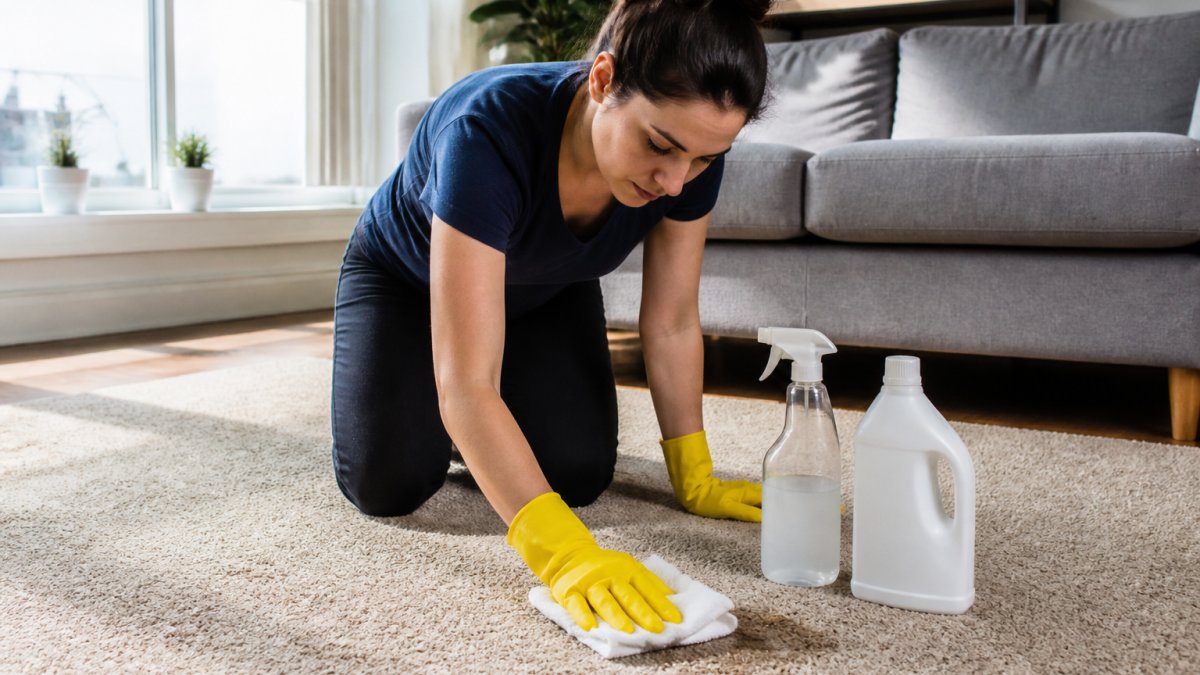
- Blot fresh accidents immediately with a clean cloth, pressing down rather than rubbing.
- Flush the spot with cool water to dilute urine proteins.
- Apply an enzyme cleaner and let it sit for the full label dwell time.
- Blot dry, then place a towel and weight over the spot to pull moisture from padding.
- Repeat application on older stains, since one pass rarely reaches deep residue. For a deeper step-by-step guide, see how to remove dog smell from upholstery.
Finding the Best Pet Odor Eliminator for Apartments
For a ready-to-shop option, our 6-pack pet odor eliminator candles let you choose six scents.

What to Check Before You Buy
- Source vs. masking: Does the product claim to neutralize, or just freshen?
- Residue: Will it leave film on carpet or hard surfaces a landlord will notice?
- Dwell time: Can you leave it in place long enough in a small space?
- Pet safety: Is it phthalate-free and safe around dogs and cats?
- Coverage: How many rooms will one unit handle?
Pet Odor Control Tips for Renters Who Cannot Rip Out Carpet
Belle & Mr. Tom's soy-blend candles are formulated with odor neutralizers. If you rely on candles and sprays in a small space, read are scented candles safe for pets.
Comparing Cost and Value Across the Alternatives
Value in apartment odor control is not the sticker price but cost per usable treatment, coverage, repeat applications, and refill availability. A $9 spray needing three passes on the same spot costs more than a $30 enzyme bottle that handles a dozen accidents.
The Four Numbers That Decide Value
- Cost per treatment. Divide the purchase price by the accidents or rooms it realistically handles. A 32 oz enzyme cleaner typically treats 8 to 12 spot applications, so a $25 bottle lands around $2 to $3 per treatment, while aerosol sprays covering only 2 to 4 touch-ups per can cost more per use.
- Coverage. Read the label for square footage or room count, not just ounces. A 13 oz soy-blend candle commonly burns about 60 to 70 hours, roughly one to two months of evening use per room in a 700-square-foot unit, while a 16 oz powder jar may treat only one 10-by-10 room.
- Repeat applications. Enzyme products usually need two or three passes on older stains because the first dose is consumed by surface residue. Budget for that. Sprays and fragrance products need daily reapplication in a small, poorly ventilated unit, which erases their low upfront price.
- Refill and restock. Check whether the brand sells refills, concentrates, or multi-packs. A concentrate that makes a gallon for under $20 beats a ready-to-use spray at $8 per quart on cost per ounce, but only if you will actually mix and use it.
A Practical Cost-Per-Room Framework
Map your apartment by zone and assign a monthly budget to each. A one-bedroom with two carpeted rooms, one litter area, and hard floors typically needs one enzyme bottle per quarter, one candle or air purifier for the main living space, and a passive absorber for a closet or litter corner. This layered approach usually costs less per month than repeatedly buying a single "pet odor exterminator" product, because each tool does the job it is actually good at.
Where Bundles and Subscriptions Fit
Belle & Mr. Tom offers 3-pack and 6-pack candle bundles. The 6-pack bundle also offers subscription delivery every 2, 4, or 6 months.
Build Your Own 6-Pack Bundle - Choose Any 6 Pet Odor Eliminator Candles | 13oz →
The Hidden Costs Renters Forget
Residue that ruins carpet can cost far more than any product. A failed deposit deduction for pet odor or staining often runs into the hundreds of dollars, dwarfing the difference between a $12 spray and a $25 enzyme cleaner. Factor in residue risk, drying time (damp carpet can grow mildew and add a new odor), and fiber safety. The cheapest product that damages the carpet is the most expensive option.
Building a Room-by-Room Odor Plan for Your Apartment
Most pet odor guides treat every smell the same. Apartments do not allow that. A litter box in a 5-by-5 bathroom, urine soaked into carpet padding in a bedroom, and a lingering smell on a shared hallway wall are three different problems with three different fixes. Build the plan by surface and odor source first, then assign a tool to each zone.
Step 1: Identify the Odor Source Before You Buy Anything
If the smell comes back after a thorough clean, stop buying sprays and troubleshoot contamination. Lift a corner of carpet if your lease allows, or press a clean white towel into the spot and smell it; a damp, ammonia smell means the padding is holding residue and cleaning alone may not solve it.
Step 2: Match the Tool to the Surface
| Surface | Best First Tool | Why |
|---|---|---|
| Carpet and rug | Enzyme cleaner, full dwell time | Breaks down urine proteins in fibers |
| Carpet padding or subfloor | Repeated enzyme treatment or professional extraction | Surface sprays cannot reach deep residue |
| Hard floors and grout | pH-appropriate cleaner plus enzyme on grout lines | Grout is porous and traps residue |
| Upholstery and pet beds | Washable covers on hot cycle; enzyme spot treatment | Fabric holds dander and urine |
| Litter area | Charcoal absorber plus daily scooping | Ammonia builds fast in small spaces |
| Whole-room air | Carbon-filter air purifier or neutralizing candle | Continuous background control |
Step 3: Assign Tools by Room
- Bedroom. Enzyme cleaner on any accident, a neutralizing candle or air purifier for background freshness, and a washable throw on the bed if your pet sleeps there. Keep the door closed during enzyme dwell time.
- Living room. Candle or air purifier for ongoing freshness, enzyme treatment on upholstery and rug spots, and a twice-weekly HEPA vacuum pass.
- Bathroom or litter room. Scoop daily, use a charcoal absorber near the box, and run the exhaust fan during and after cleaning. Small, poorly ventilated rooms saturate fastest.
- Kitchen and entry. Hard floors wipe clean; keep a pet-safe cleaner on hand for tracked-in mess and a mat at the door to catch residue.
- Closets and hallways. Passive absorbers work well in enclosed spaces with low airflow.
Step 4: Respect Apartment Constraints
Shared walls and limited ventilation change the rules. Run exhaust fans and open windows when the label calls for ventilation, and choose low-residue, low-odor products when you cannot ventilate well. Check your lease before using strong oxidizers or anything that could stain shared carpet, keep air purifiers and extractors quiet enough for shared-wall living, and treat accidents the same day, because odor sets into padding fast in small units.
Step 5: Refresh Monthly
Rotate and refresh the plan monthly: replace or recharge absorbers, check candle burn time remaining, wash pet bedding, and re-inspect any spot that has smelled before. A layered, surface-aware plan beats any single product, because one tool cannot cover every surface, air zone, and contamination depth in a small shared space.
Frequently Asked Questions
What is a good alternative to Pet Odor Exterminator for an apartment?
Belle & Mr. Tom's 13oz soy blend candles are formulated with odor neutralizers and burn approximately 70 hours each. The 2-pack bundle is $52.18.
Do enzyme cleaners work better than pet odor sprays?
They solve different problems. Enzyme cleaners break down the urine proteins and organic waste left in carpet fibers, so they address the odor source at the root. Pet odor sprays are faster for hard surfaces, fabrics and quick touch-ups, but many only mask the smell with fragrance. If the odor keeps returning after a spray, the source was never removed. Use enzymes on soft surfaces and sprays for surfaces you cannot soak.
Are odor-eliminating candles safe to use around pets?
The listed 2-pack product is described as made with soy blend wax, phthalate-free, and Prop 65 compliant.
How do I keep pet odors from bothering apartment neighbors?
Stop odors at the door and in the hallway path. Keep a washable mat at the entry, clean litter boxes daily rather than weekly, and ventilate when you cook or clean. Run a candle in the room closest to your shared wall or entry so smells do not travel into common areas. Repeat applications matter more than strength: a fresh candle in a small room does more than a heavy fragrance that seeps under the door.
How often should I clean pet areas to prevent lingering odors?
Daily for litter boxes and food bowls, and immediately for fresh accidents. Spot-treat urine with an enzyme cleaner as soon as you find it, then let it dwell for the full label time before blotting. Deep clean carpets and upholstery monthly in a multi-pet apartment. Between cleanings, a pet odor eliminator candle keeps the room fresh so you are not relying on cleaning alone to control what guests notice.
Apartment pet odor is stubborn, but it is solvable with the right combination of source removal and ongoing freshness. Belle & Mr. Tom hand-pours soy-blend candles formulated with odor neutralizers, phthalate-free and Prop 65 compliant, with scent bundles and subscription options for multi-pet homes. Get started with Belle & Mr. Tom and build a fresher, guest-ready apartment room by room.
