
Last Updated: November 5, 2026
Quick Summary
The main pet odor sources are urine in carpet and padding, the litter box, pet bedding, dander in upholstery, rugs and soft surfaces, the pet's own coat and paws, and poor ventilation. Fragrance only covers these smells, so finding and cleaning the source works better.
- Urine often soaks through carpet into the padding and subfloor, where odor can persist for months.
- Use a UV blacklight in a darkened room to find dried urine deposits, which glow yellow-green.
- Enzymatic cleaners break down uric acid crystals rather than covering the odor.
- Recheck carpet only after it is fully dry, since wet product scent can mask the result.
- If odor persists after two cleaning cycles, the padding may need to be replaced.
Table of Contents
- Why Fragrance Alone Rarely Fixes Pet Odor
- 1. Urine in Carpet and Carpet Padding
- 2. The Litter Box and Surrounding Floor
- 3. Pet Bedding, Blankets and Crate Liners
- 4. Pet Dander Trapped in Upholstery
- 5. Rugs, Floors and Other Soft Surfaces
- 6. Dogs and Cats Themselves: Coats, Paws and Grooming
- 7. Ventilation and Stale Indoor Air
- Frequently Asked Questions
Pet owners often reach for a scented candle or spray the moment a home starts to smell like dogs or cats, but knowing the main pet odor sources is the first step toward lasting relief. The problem is that fragrance covers the odor rather than removing it. Learn why enzymatic cleaners fail to remove odors and why the source matters more than the scent.
Why Fragrance Alone Rarely Fixes Pet Odor
Fragrance adds a new smell on top of the old one. It does not remove the material behind the pet odor sources in the first place. Belle & Mr.
Many households notice that a room smells fine for an hour after lighting a candle, then the old smell returns. That usually means the source is still present. Work through the list below from the top, and you will often find the culprit quickly.
1. Urine in Carpet and Carpet Padding
Urine is the most common and most persistent source of pet odor in carpeted homes. It soaks through the carpet face, passes the backing, and can saturate the padding and even the subfloor beneath. A spot that feels dry on top can still hold odor for months, and that is why a room can smell clean one hour and sour the next. Find out how long lingering odor takes to fully go away after cleaning.
How to Locate Hidden Urine Before You Treat It
Before you clean, map the contamination. Most practitioners find that odor is strongest at the perimeter of a room, along baseboards, near doorways, and under furniture the pet favors.
A UV blacklight is the standard inspection tool for dried urine. In a darkened room, urine deposits typically fluoresce a yellow-green under the light. Mark each spot with painter's tape so you can treat and recheck the same areas later.
How to Remove Pet Urine Odor from Carpet Step by Step
- Blot fresh urine with paper towels, pressing firmly to pull liquid up. Replace towels until no more transfers.
- Rinse the area lightly with cool water and blot again. Avoid over-wetting, which can push contamination deeper.
- Apply an enzymatic cleaner formulated for pet urine. These products use enzymes to break down the uric acid crystals that cause the odor, rather than covering them. Let it sit for the full contact time on the label, usually 10 to 15 minutes, but check the specific product.
- Blot the area dry and let it air out fully. Place a fan or open a window to speed drying.
- Recheck after the carpet is completely dry, not while it is still damp. Odor that returns after drying usually means the padding or subfloor is still contaminated.
When the Padding or Subfloor Is the Real Source
If the odor persists after two proper cleaning cycles, the padding is likely saturated. In that case, the carpet must be pulled back, the padding cut out and replaced, and the subfloor cleaned and sealed before the carpet is reinstalled. This is a job many homeowners hand to a professional, and it is the step most DIY attempts skip.
How to Verify the Treatment Worked Without Fragrance
Wait until the area is fully dry, then smell close to the carpet with no candle, spray, or plug-in running. If you can still detect odor, treat again or escalate. Do not judge success while the cleaner is still wet, because the product's own scent can mask the result.
When to Call a Professional or Your Veterinarian
Call a professional carpet cleaner or restoration company when urine has reached the subfloor, when the affected area is larger than a few square feet, or when repeated cleaning fails. Separately, if your pet is urinating outside the litter box or in new locations, or if the urine odor has changed noticeably, talk to your veterinarian, a persistent change in urine smell can signal a health issue that no cleaner will fix.
The table below summarises the main steps for removing pet urine odor from carpet, so you can check each one in order.
| Step | What to do | Time or frequency |
|---|---|---|
| Blot fresh urine | Press paper towels firmly until no more transfers | Replace towels until dry |
| Rinse lightly | Use cool water, then blot again | Avoid over-wetting |
| Apply enzymatic cleaner | Let it sit for the full contact time | Usually 10 to 15 minutes |
| Dry fully | Use a fan or open a window | Until completely dry |
| Recheck | Smell the area with no fragrance running | After carpet is fully dry |
| Escalate if needed | Pull back carpet and replace padding | After two failed cleaning cycles |
2. The Litter Box and Surrounding Floor
For cat owners, the litter box and the floor around it are a common odor source. Litter that is not scooped often enough, or litter dust that settles on the surrounding floor, can make a whole corner of a room smell.
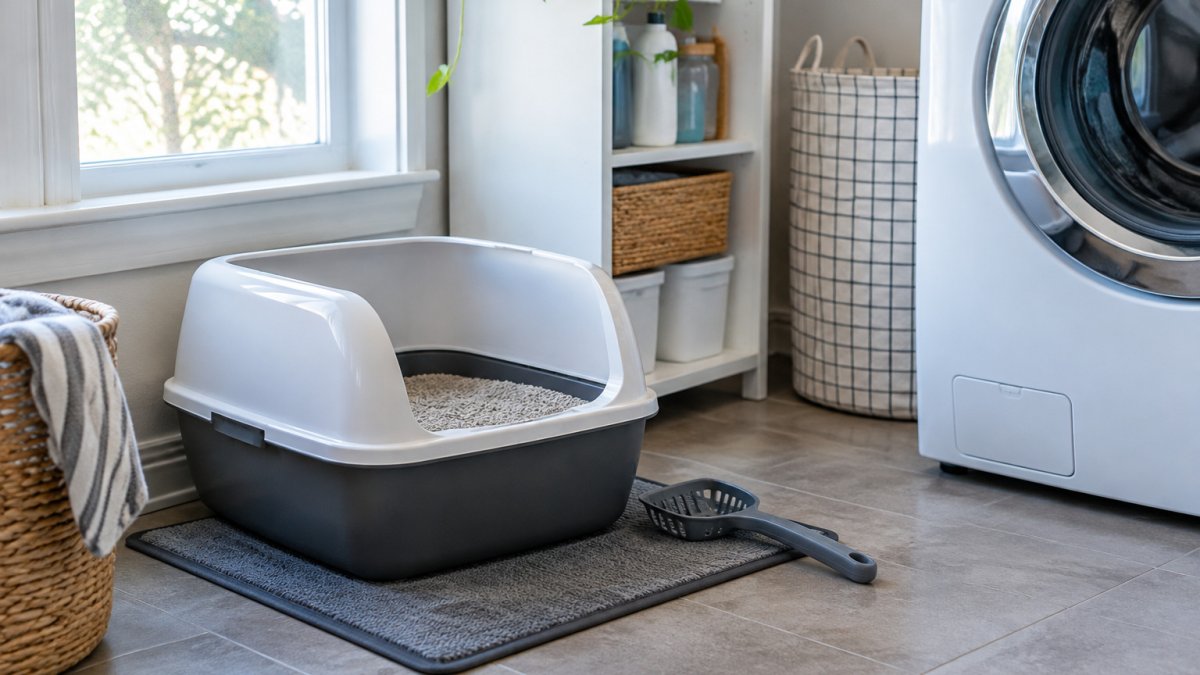
Scoop daily, replace litter on a regular schedule, and wipe the floor and mat beneath the box. Follow seven steps to eliminate litter box smell at its source.
3. Pet Bedding, Blankets and Crate Liners
Bedding absorbs oils, dander and moisture every day. Over time it holds odor even after it looks clean.
Wash bedding on a regular schedule using a detergent that works on pet odor, and dry it fully before putting it back. Check the crate liner and the seams of the bed, since those areas can trap smell. If odor has settled into the carpet beneath or around the bedding, removing pet odors there can help keep the clean sleeping area from picking up the smell again.
4. Pet Dander Trapped in Upholstery
Dander, the small flakes of skin pets shed, settles into couches, chairs and cushions. Upholstery holds it well, and the smell builds up as dander mixes with oils and moisture from the pet.
Dried Oak & Lavender Pet Odor Eliminator Candle - Earthy Woodsy Scented 13oz →
Vacuum upholstery thoroughly, paying attention to seams, crevices and the underside of cushions. Get a fast, practical method for removing dog smell from upholstery. For a faster result on a specific piece of furniture, focus on the cushions the pet uses most.
5. Rugs, Floors and Other Soft Surfaces
Rugs, area mats and other soft surfaces trap hair, dander and moisture in ways hard floors do not. A rug near a pet's favorite spot can smell strongly even when the rest of the room seems fine.
Vacuum rugs regularly and clean them on a schedule that matches how much your pets use them. Lift a rug occasionally and check the floor and back of the rug for odor. Hard floors are easier to clean, but they still need regular mopping with a pet-safe cleaner.
6. Dogs and Cats Themselves: Coats, Paws and Grooming
Sometimes the smell comes from the pet. Coats collect oils and dirt, paws track in outdoor smells, and skin conditions or ear problems can produce a distinct odor. Grooming habits and bathing frequency both affect how much smell a pet brings into the house.
Brush your pet regularly, wipe paws after walks, and bathe on a schedule your vet recommends. If the odor seems stronger than normal, or your pet has skin, ear or coat changes, talk to your veterinarian.
7. Ventilation and Stale Indoor Air
A home with poor airflow traps odor. Run quick checks to see whether your home smells like pets before deciding what to fix. Closed windows, weak air circulation, and a clogged HVAC filter can make even a small source smell strong throughout the house. Ventilation will not remove a major source by itself, but it is the difference between a smell that clears in an hour and one that lingers for days.
How to Inspect Your Home's Airflow
Start with the HVAC system. Check the filter, a filter loaded with pet hair and dander restricts airflow and recirculates odor. Look at the return-air grilles for visible hair and dust, and check supply vents for buildup.
Next, check the rooms where odor collects. Bathrooms, laundry rooms, and closets with poor circulation hold smell. A simple test: close the door for an hour, then open it and smell at the threshold. If the odor is noticeably stronger inside, that room needs better airflow or a source check.
Practical Steps to Improve Ventilation
- Open windows on opposite sides of the home for cross-ventilation when weather allows.
- Run bathroom and kitchen exhaust fans during and after cleaning.
- Use portable fans to move air through rooms where pets spend time.
- Keep HVAC returns clear of furniture, pet beds, and storage.
- Consider a HEPA air purifier in the room where the pet sleeps; HEPA filtration captures dander and hair particles that carry odor.
Watch out: running a fan without addressing the source just spreads odor through the house. Ventilate after cleaning, not instead of it.
How to Tell Ventilation Is the Problem vs. a Hidden Source
If the smell is strongest in rooms with closed doors and fades when air moves, ventilation is a likely contributor. If the smell returns to the same spot even with good airflow, the source is still present and needs cleaning. Use ventilation as a supporting step, not a substitute for source removal.
When to Bring In an HVAC Professional
If odor persists after filter changes and vent cleaning, or if you notice musty smells coming from vents, call an HVAC technician. Ductwork and evaporator coils can accumulate debris and microbial growth that household cleaning cannot reach. This is also the point to check for moisture problems, since damp air and pet odor often travel together.
Frequently Asked Questions
What are the most common sources of pet odor in a home?
The most common sources are urine in carpet and padding, litter boxes and the floor around them, pet bedding and blankets, dander trapped in upholstery, rugs and other soft surfaces, the pets' own coats and paws, and stale indoor air from poor ventilation. Many homes have two or three of these at once, which is why one scented product rarely solves the problem. Check each source before adding fragrance so you know what you are actually treating.
How do you find the source of a lingering pet smell?
Walk through the home at pet level with the lights off and a bright flashlight, since urine residue can fluoresce under UV light. Sniff bedding, carpet edges, the underside of furniture cushions and the area around litter boxes. Note which spots smell strongest when the room is warm or humid, and test one area at a time after cleaning. If a smell returns in the same spot after cleaning, the odor is likely in the padding or subfloor and needs deeper treatment.
How do you get rid of cat litter smell?
Scoop solid waste daily, change the litter on a schedule that matches your cat count and litter type, and wash the box with unscented soap and water every few weeks. Place the box in a ventilated area away from food and sleeping spaces, and check the floor around it for scattered litter or urine splashes. Once the box and floor are clean, a candle or diffuser can help with the remaining air freshness, but it should not be the first step.
Is fragrance safe to use around pets?
Fragrance safety depends on the product, the amount, and your pet. Choose products labeled phthalate-free and avoid heavy essential oil blends, since some oils can irritate a cat's or dog's respiratory system. Burn candles in a well-ventilated room, keep them out of reach, and watch for sneezing, coughing, or watery eyes. If your pet shows any of these signs, remove the source and contact your veterinarian.
Once you have checked these seven sources, the room is ready for a candle to do its job. Belle & Mr. Tom offers hand-poured, soy-blend candles in scents like Dried Oak & Lavender, Kitchen Lemon, Into the Woods, Pumpkin Souffle, At the Beach and Pretty in Pink Sands, each at $28.99. Shop the collection to find the scent that suits your home.
